
The "Real Bullet" Boom Triggered by the Fourth-Generation Civic
Original by Honda Magazine | JDM Car Enthusiast Magazine | 2025-03-20 18:58:38
🌟 Hello, my friend...
Welcome to a hidden gem—OLD FISHER DISCOUNT, your one-stop online shop with 9,999+ unique finds waiting for you. 🎉
🛒 Explore a World of Discoveries
Dive into our collection and uncover special treasures that will delight and inspire.
🔗 Start Your Journey Here: www.fisherdiscount.com
Come and see why we’re more than just a shop; we’re a place of endless possibilities! ✨
On September 9, 1987, Honda released the fourth-generation Civic (EF). If you've been following our page, you’ll know this is when the Civic truly began to shine. Among C-segment cars, only Honda was bold enough to equip the Civic with double wishbone suspension in both front and rear—a move that laid a solid foundation for Civic’s legendary handling and popularity.
Forget about "Type R" or "Red Top" engines—Civic’s true fame began with the EF generation. Honda prioritized handling performance as a fundamental engineering principle. A car with only brute horsepower but no solid chassis or agile suspension is all talk. With EF’s debut, the car world was shocked—very few C-class cars could boast full double wishbone suspension even today. Enthusiasts still rave about it, while those hyping "Red Top Engines" need a wake-up call. 😏
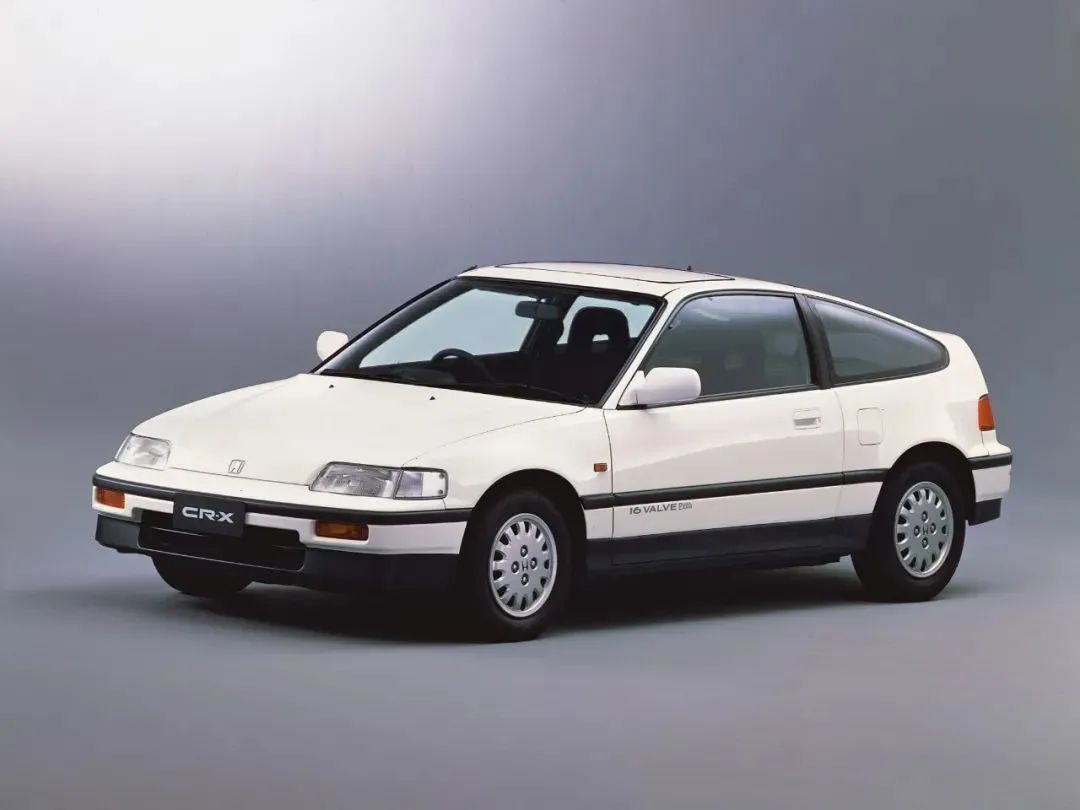
A week after the Civic EF launch, on September 16, the second-generation CR-X—based on the EF chassis—was introduced. Initially, only EF6 (1.5L) and EF7 Si (1.6L) were released. In 1989, EF8 SiR with the B16A engine joined the lineup.
The second-gen CR-X, nicknamed "Little Bullet," was once again derived from the latest Civic chassis. Unlike the first-gen which belonged to the Ballade line, this CR-X returned to the Civic family. 🍥 With the EF chassis, its handling was reborn—especially thanks to the double wishbone suspension. Compared to the older MacPherson + torsion beam combo, the EF’s setup improved wheel camber control and tire grip significantly. Honda engineers infused racing experience into the suspension tuning, making cornering sharp and effortless. 🏎️
Critics who bashed 80s Civics for “soft chassis” should drive a Corolla, Golf, or Escort from the same era—none were rigid either! The 1.5L model weighed only 820kg, the ZC-engine Si was 880kg, and automatic versions slightly heavier.
Chassis codes changed to EF6, EF7, EF8—no longer AF/AE like before. The first-gen CR-X used MacPherson front and trailing arm rear suspension, but the second-gen featured double wishbones on all corners—unheard of in C-class cars. 😮
The design still followed a "Kammback" styling with improvements like sleeker nose, a large electric sunroof, and a vertical rear window to reduce blind spots. The rear hatch glass had a smoked finish, enhancing both visibility and privacy. 😎
Honda also offered a glass roof version with titanium coating to block UV rays—though it still got hot under the sun (especially with black interiors). ❄️☀️
Interior changes included a driver-oriented dashboard, redesigned steering, and elongated dimensions: 3755mm length (vs 3675mm) and 2300mm wheelbase (vs 2200mm). Weight increased slightly (up to 1000kg in SiR), but the double wishbone setup compensated for this.
Compared across generations, the second-gen CR-X was the most balanced. The third-gen added 100mm wheelbase but also 100kg weight. First-gen was light but had outdated rear suspension. The second-gen? A graceful dancer in corners. 💃
Let’s talk suspension again. Double wishbone = vertical arms connected to chassis. Many confuse this with "double A-arm" or "multi-link." If toe/camber is adjusted via multiple rods—it’s multi-link. 🛠️
Why did later Civics (7th gen onwards) return to MacPherson/double wishbone combo? Cost and packaging. But enthusiasts still miss the EF-style setup.
Engines: EF6 had D15B SOHC, 105PS/129Nm. EF7 Si used ZC DOHC engine, 130PS/144Nm with Honda’s PGM-Fi injection. 1988 facelift added ABS. EF8 SiR debuted in 1989 with B16A DOHC VTEC—160PS/152Nm. 🚀
To fit ZC engine, Si had a raised hood section. EF8 B16A version omitted it. Si Exclusive edition featured leather interior and luxury trim—rare at the time.
1990 facelift added longer bumpers (3775mm > 3800mm), electric mirrors, larger brakes (262mm rotors), stiffer springs, and LSD on SiR. Instrument cluster changed to triple-ring layout. Only 5-speed manual for SiR. 🔧
Honda’s B16A offered 100PS/L—a record in civilian engines. Though torque delivery wasn’t linear, its charm lay in high-rev thrill.
Mugen CR-X Pro.2, based on 1987 Si, featured exclusive body kit by aero expert Takuya Yura, and was used as a safety car at Suzuka. 🏁
That wraps the second-gen CR-X story. Stay tuned for more on the third-gen. 🙌
Leave a comment