
Automobile Culture: Have You Figured Out These Body Structures?
Automobile Culture: Have You Figured Out These Body Structures?

Biaoxue Magazine Japanese Car Enthusiasts Magazine 2021-09-23 11:32:10
As a science popularization article on automobile culture, the keyword "car body style" is unavoidable. Just as we have always emphasized the importance of "car classification," discussing cars without these categorical factors would be aimless and awkward. At most, the article or video might conclude with the car's price and whether it is worth buying, but honestly, whether a car is worth purchasing or not varies for different people—it’s not up to car reviewers to decide.
🌟 Hello, my friend...
Welcome to a hidden gem—OLD FISHER DISCOUNT, your one-stop online shop with 9,999+ unique finds waiting for you. 🎉
🛒 Explore a World of Discoveries
Dive into our collection and uncover special treasures that will delight and inspire.
🔗 Start Your Journey Here: www.fisherdiscount.com
Come and see why we’re more than just a shop; we’re a place of endless possibilities! ✨
Car Body Styles
In English, car body styles are referred to as "Car Body Styles" or "Car Body Design." These classifications distinguish each car model’s purpose, market positioning, historical background, and trends. Furthermore, automobile manufacturers can only proceed with mechanical engineering design, body styling, and other engineering aspects once they have determined a car's body style.
Today, with the widespread adoption of unibody construction (Unibody), multiple body styles can be derived from the same chassis platform according to market needs. This often confuses many car enthusiasts:
"How can this sedan share the same chassis as that SUV?"
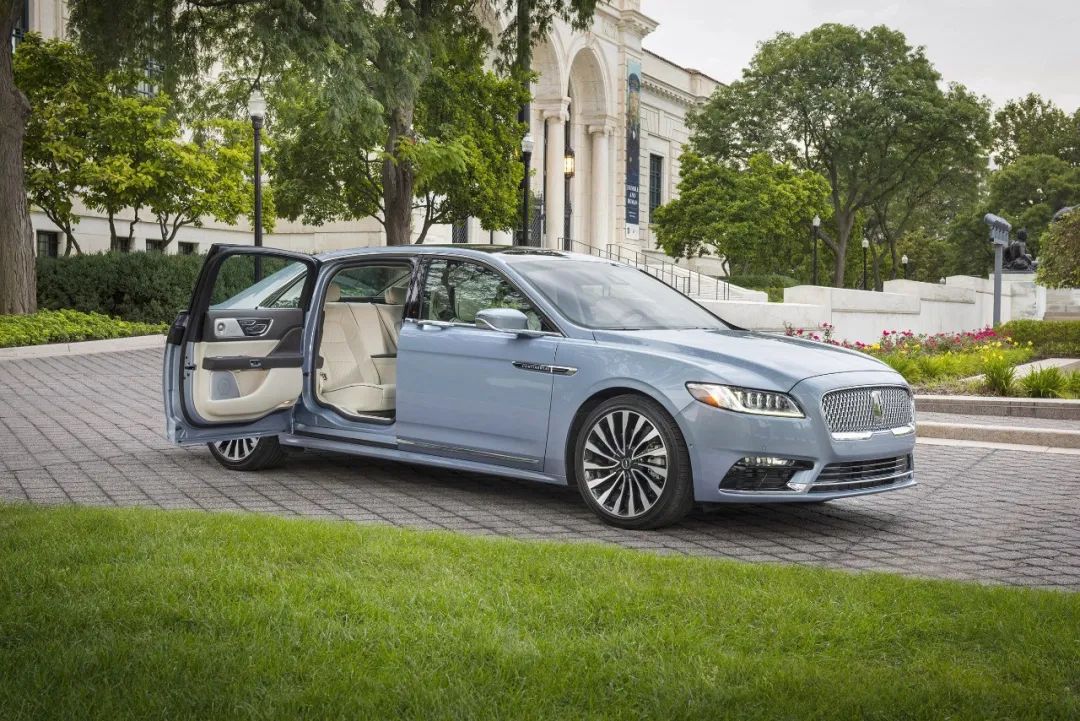
Three-Box, Four-Door Sedan: Sedan or Saloon
The term "Sedan" originated in France as the name of a type of sedan chair. During the horse-drawn carriage era, this name was used for a luxurious carriage where even the driver's seat had a covered structure and was separated from the rear passengers. This fully enclosed carriage later became synonymous with the closed-body automobile.
In 1912, the word "Sedan" reappeared in an advertisement for an American Studebaker vehicle. However, this was a four-seat convertible at the time. It was only later that American manufacturers gradually adopted the term to refer specifically to three-box, four-door sedans. This is why the American market prefers the name "Sedan."
In the UK, these vehicles are commonly referred to as "Saloon" or "Brougham."
In France, they are called "Berline."
In Italy, the term is "Berlin."
In Germany, it is "Limousine."
These naming conventions were common in early European cars.
Many people today find convertibles rare, but originally, automobiles did not have fixed roofs. The introduction of hardtop sedans occurred later, but they were not the mainstream for a long time. The first industrially mass-produced sedan in Europe was the Citroën Type A.
Historically, cars were initially open-top. Adding a hard roof became an option only in the 1920s, when cars started becoming widely used as private vehicles. At that time, car production used steel ladder frames with wooden frameworks covered in metal sheets and leather/wool interiors.
Fully steel-bodied vehicles only appeared after 1919.
Adding a heavy and noisy hardtop blocked the owner's visibility to others, making it less desirable in early times.
Thus, the Sedan body style gradually evolved from open-top to hardtop, through modifications in powertrain placement and drive configurations, and transitioned from partitioned to non-partitioned designs.
Eventually, the concept of a "sedan" became widely understood as a four-door vehicle with two rows of seats, accommodating four to six passengers.
The Debate Between Two-Door Sedans and Coupés
Today, this debate seems unnecessary, as most manufacturers no longer distinguish between the two, let alone ordinary consumers.
However, the differences between two-door sedans and coupés remain clear.
For example, the BMW 3 Series often refers to its two-door version as a "two-door sedan."
This is because the earliest 3 Series was derived from the "02 Series," which was a short-wheelbase, two-door version of the New Class (which later evolved into the 5 Series). As a result, BMW classifies it as a two-door sedan.
In contrast, Mercedes-Benz follows a different classification approach.
The E-Coupé, built on the C-Class platform, replaced the CLK-Class.
Within Mercedes-Benz’s classification system, the CLK-Class was an entry-level coupé, positioned lower than the CL-Class. Therefore, the E-Coupé follows the same Coupé designation.
There are many such cases—not all two-door sedans can be called a Coupé.
The term "Coupé" originates from the French word "Coupé," which itself came from a carriage design called "Coupé de Ville."
Its defining feature was that only the passenger area had a roof, while the driver was exposed.
This body style was common in French cars but disappeared after 1939.
However, the term survived and was widely adopted in the 1950s to refer to two-door, two-seat or 2+2 vehicles.
In Italian, Coupé-style vehicles are called "Berlinetta," a term used for all hardtop sports cars or grand tourers.
For example, Ferrari names all its hardtop models as "Berlinetta," and the "GTB" in Ferrari model names stands for "Gran Turismo Berlinetta."
Four-Door Coupé: A Marketing Term?
In recent years, a term has been sensationalized on social media—"four-door coupé."
However, strictly speaking, this body style has not been internationally recognized as a distinct category.
The first vehicle marketed as a "four-door coupé" was the 1958 Rover P5B.
Later, in 1988, Nissan released the Cefiro (A31), also referred to as a "four-door coupé" in promotional materials.
However, it wasn’t until 2004 that the concept resurfaced with the introduction of the Mercedes-Benz CLS-Class.
Other models like the Porsche Panamera, Audi A7, Kia Stinger, DS4, and Aston Martin Rapide followed.
However, since these vehicles maintain the same fundamental structure and are only marketed visually as "four-door coupés," they are not widely accepted as a distinct body style.
Conclusion
The above sections covered the most mainstream car body styles.
This article did not touch on SUV or CUV classifications, because SUVs are essentially raised five-door hatchbacks.
Since their development became a systematic category in the 1990s, SUVs deserve a separate discussion in another article.
Leave a comment